My New Hero, Philip Huang.
I thought, after badmouthing Tim Miller yesterday, I should post something positive today. I love this guy so much I don't even know what to say.

Steven Cheslik-DeMeyer
 cross-posted at The Gay Place, Austin Chronicle's LGBT blog.
It is not accidental that I see the thread of this show reaching back to Tim's work in the late 80s. He makes frequent reference to his status as one of the NEA 4. He mentioned that his first Austin appearance was at the Vortex Theater, some 25 years ago. And he has been wearing essentially the same costume the whole time (tank top, shorts, black Doc Martens, i.e., ACT UP drag, 1988). I suspect he does it deliberately in order to suggest some continuity in his work and in its relationship to the gay rights movement, to suggest that our struggle follows a continuous thread; but maybe that's just what he's comfortable wearing on stage. What it does for me, and maybe for anyone who's been here for the long haul, is to emphasize what has changed, what has aged: Tim's hair has gone gray, he's grown thick around the middle, his skin has lost elasticity. I've experienced all those changes in my body too, which I think is why I had such a personal, emotional response to the show. Since I felt such solidarity with Tim and the activism his work was a part of 20 years ago, my response to the show on Sunday made me question what my politics meant back then and what they mean now. Tim's politics have grown soft along with his muscle tone, and that feels like a betrayal.
Maybe I'm projecting something onto Tim's work that was never there. It's been a long time, I should go back and read the earlier stuff. My memory tells me he was, we were, calling for something more radical than what Tim is asking for now: that is, so-called marriage equality, in other words, asking to be let in the gate. I thought we were demanding that the wall be broken down, that possibilities be expanded. I know that's what I was fighting for. But maybe Tim was always just begging for his entitlement and it just seemed more radical back then. Was the whole gay rights movement only about demanding what we felt entitled to? That's what sickens me.
For work that purports to be about politics, Tim's political commentary is not at all sharp; it is even incoherent at times. He makes offhand reference to the immorality of Bush's war in Iraq, but a few minutes later he complains that American soldiers, whom he paints in heroic terms, are kicked out of the military because they are homosexual. No indication at all of any contradiction or irony in the juxtaposition of these facts.
I think the most off-putting aspect of the show is the same thing that I find off-putting about most LGBT activism of the last few years, and about liberal politics in general lately, the assumption that "of course we all agree. Of course we all believe that gay marriage is a civil right and that it should be the main focus of our movement." It's a smug sort of California arrogance, an expectation of consensus, an attitude among privileged people who somehow can't imagine that many people's lives are not exactly like theirs. The message of The Lay of the Land is so mainstream, so conservative, so normative, it might as well be a commercial for the Human Rights Campaign.
He begins the show by reminding us that on election day in 2008, a majority of Californians voted "to take away our civil rights." It ends with a sort of paean to American democracy and a plea that the U.S. government grant Tim and his husband full citizenship. He frets that he might have to move to Australia because the U.S. won't let his immigrant husband stay here because they're not really married. Poor thing.
Is this what the anger and creativity of my generation is reduced to? Are we really that tired and slack that all we want is to file joint tax returns and be left alone with our American dream, just like the straight people? If this is where my generation has ended up, with this hobbled, compromised vision of what our lives can be, I reject it.
 This essay -- I found it via Andrew Sullivan -- was a slap in the face, in a good way. Here's the pith, but the whole thing is worth reading:
"The best thing that could happen to poetry is to drive it out of the universities with burning pitch forks. Starve the lavish grants. Strangle them all in a barrel of water. Cast them out. The current culture, in which poetry is written for and supported by poets has created a kind of state-sanctioned poetry that resists innovation. When and if poetry is ever made to answer to the broader public, then we may begin to see some great poetry again – the greatness that is the collaboration between audience and artist."I don't know much about the world of poetry, but as I was reading this essay I kept thinking how you could easily replace poets and poetry with artists and art.
 I got my settlement check today! The teller said the funds will be available at midnight tonight. I made a list for tomorrow:
 Last night after the show, a group of us went to Mrs. Johnson's because it's right around the corner from the theater. (Okay, well, we didn't go because it's right around the corner from the theater; we went to Mrs. Johnson's because we wanted donuts, whatever.)
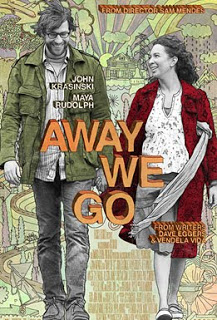 I just watched a really wonderful movie called Away We Go. I had this film sort of on my radar a while back -- I think I saw a trailer for it which mentioned it was written by Dave Eggers, one of my favorite writers. And the cast includes Allison Janney, Catherine O'Hara, etc., lots of my favorite actors. Then I think it disappeared, or maybe it was never released in Austin, I'm not sure, but then M, the guy I've been seeing -- I've called him my new boyfriend a couple times recently when talking about him to other friends, such a heavy word, but we've been spending a lot of time together now for several weeks, so what else do you call that? more on that topic later, I'm sure! -- M recommended the film to me and I put it at the top of J's and my Netflix queue.
Visit msnbc.com for breaking news, world news, and news about the economy
The one consolation is that it makes for a very interesting era for queer politics, which excites the history geek in me. What if the right splits into a religious fanatic wing and a traditional conservative/libertarian wing (which looks sort of likely). The gay marriage people will find themselves allied with the traditional conservatives. Will they be able to stand it? Will the gay rights movement fracture as well, with more tradition-minded gays getting married and being subsumed into mainstream America and the rest of us going off to create a new sexual minority movement of some kind?
Leaving aside political cynicism, this entire affair proves that the GOP is not simply still infected with the vestiges of white supremacy and racism, but is neither aware of the infection, nor understands the disease. Listening to Liz Cheney explain why Harry Reid's comments were racist, was like listening to me give lessons on the finer points of the comma splice. This a party, rightly or wrongly, regarded by significant portions of the country as a haven for racists. They aren't simply having a hard time re-branding, they don't actually understand how and why they got the tag.I don't like talking to Republicans for the same reason I don't want to teach 1st grade. I get bored and frustrated having to break everything down, simplify every concept beyond recognition, and still see in their faces that they have absolutely no idea what I'm talking about.
Training your body to run really hard into another human being has no athletic benefit whatsover. Players get really hurt and except for the small percentage of them who can make a career out of it (and even those guys, but that involves a longer explanation) are totally exploited (even if they do so willingly and are convinced, at the time, that they are having the greatest time of their lives). Athletic departments, TV networks, and advertisers make billions of dollars off the backs (and shoulders and knees and legs)of teenagers who, if you were to really tally it up, receive very little compensation.It will take a much more knowledgeable scholar of theater and sports to follow the threads from gladiator games to American football, but it seems to me that the human sacrifice element of the game is essential. Without it, nobody would be interested, right?
"On Texas’ fifth snap of the Bowl Championship Series title game Thursday night, Alabama defensive lineman Marcell Dareus leveled Texas quarterback Colt McCoy with a punishing hit on an option play."What the hell are they talking about? I'm right back in fifth grade gym class. We're playing flag football; there was never any discussion of the rules, yet I'm expected to know them. It doesn't get any better: "In an era in which spread offenses have come to dominate college football, Alabama’s claim to a 13th national title comes with a game won squarely between the tackles." I get the same feeling reading Foucault. There's nothing unusual or difficult about the sentences grammatically, and the words are familiar. But its meaning is completely opaque to me.