My Gay Canon.

I’ve wanted to do this for years, compile a subjective list of what I think are the most important books for a young gay person to read, or maybe better to say a list of the books that have been most important to me as a gay man. I’m sure I’ve forgotten a few, so I reserve the right to revise the list, and as you’ll see it skews heavily toward men and books about men (I said “subjective”).

So here it is, take it for what it’s worth — My Gay Canon:

Sexual Behavior In The Human Male (Kinsey) — literally how I learned I was not alone. Found it in the DePauw University library, where my mom worked, when I was about 15. i can’t think of a more powerful instance of the emotional impact of hard data.

Word Is Out (the book based on the 1977 documentary by Peter Adair) — a dear friend in high school gave this book to me when I was 17. Looking back it was an obvious attempt to get me to come out to her, but I didn’t take the bait. Interviews with real people, not just statistics and case studies. I already loved the hippie vibe, or aesthetic, of this book and the people in it, and now I connected hippies with West Coast lefties and radical politics and, especially, with gay sexuality.

A Boy’s Own Story (Edmund White) — I don’t have quick words to describe how life-changing it was to read a book in the voice of a gay teenager. This is the beginning of my Different Light Bookstore years, when I first moved to New York and started just picking up books and reading them if they looked interesting, which always led to more books and more books. Compared to now, there weren’t a lot of “gay books,” but at A Different Light I realized there were many many more than I had realized.

City of Night (John Rechy) — anonymous sex, promiscuity, loneliness, isn’t being gay fun?

Our Lady of the Flowers (Jean Genet) — dangerous, ecstatic, all the things I wanted my life to be at 22.

The Naked Civil Servant (Quentin Crisp) — I knew who Crisp was but hadn’t read this book until maybe around 1989. I met a man in Stuyvesant Park and we’d gone to his place, which was just one small room with a shared bathroom in the hallway in a building on I think E. 4th Street. Afterwards, I was leaving, and I passed Crisp coming up the stairs as I was going down. He said a very bored hello. I thought I’d better read his book.

Urban Aboriginals: A Celebration Of Leathersexuality (Geoffrey Main) — the gay leather lifestyle’s influence on American and world culture can’t be overestimated.

Macho Sluts (Patrick Califia, nee Pat Califia) — groundbreaking lesbian erotica, which I found very hot, which maybe is not surprising since Pat, who identified as a lesbian at the time this book was written, has transitioned and is now a trans man. Anyway, sexy stories.

Christopher and His Kind (Christopher Isherwood) — Isherwood is my touchstone for everything I do as an artist. I would put all his books in my canon, but if I have to choose, I guess this is the essential one.
3103.jpg

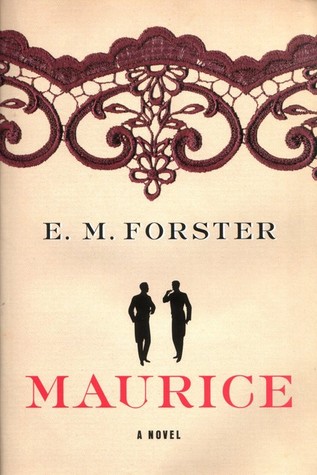
Maurice (E.M. Forster) — of course. Maybe the first gay novel with a happy ending ever written.

Tales Of The City (Armistead Maupin) — I saw the BBC series in the 90s, but I didn’t read this until just a few years ago. I think I regarded it as too conventional or something when I was young. Only recently have I recognized its power and importance.

Leaves of Grass (Whitman) — the Calamus poems especially, but all of it. I read them when I’m feeling strung out and need to be moved by something beautiful.

Death In Venice (Thomas Mann) — bleak, transgressive, depressing, all my favorite things.

Gay American History: Lesbians and Gay Men in the U.S.A. (Jonathan Ned Katz) — Everything gay in America from the 1500s to the 1970s, this book never fails to make me tear up when I open it. Just the fact that someone would undertake such a massive, comprehensive project — Katz is a hero.

The Motion Of Light In Water (Samuel R. Delany) — Delany’s memoir of his years as a young science fiction writer in the East Village of the 1960s, and his marriage to the poet Marilyn Hacker. Beautiful book.

Fun Home (Alison Bechtel) — maybe more famous in its Broadway musical adaptation, also beautiful. A story of a lesbian girl and her homosexual father, but really a story about everything. This book broke my heart.

Stuck Rubber Baby (Howard Cruse) — funny that I have 2 graphic novels on this list when I’ve probably read a total of 6 graphic novels in my whole life, but this book is important and wonderful. Connects the modern gay rights movement, and gay identity really, to the broader cultural movements of the 1960s (which, think of it, is what we’re all arguing about now as we try to celebrate the 50th anniversary of Stonewall and come to some agreement about its legacy). It’s also the best kind of memoir, achingly intimate, and revealing of the world in which the personal story was lived. I love this book.

Dancer from the Dance (Andrew Holleran) — you can’t be gay and not read this book. Holleran, to my mind, is one of the very best writers of fiction of our time.

Symonds with a pipe_resized.jpg

The Memoirs of John Addington Symonds — Written but not published (or even finished) in his lifetime. This is the earliest known instance of consciously homosexual autobiography. A frank chronicle of the discovery of his same-sex attraction at a time and place (mid-19th century England) when there were barely words for it, or maybe rather when the words we now use for it originated. It’s an incredibly vivid experience of the past. Talk about time travel.

Gay New York (George Chauncey) — About gay life in New York in the late 19th and early 20th centuries —  a truly amazing recent book showing that our journey toward freedom has not been linear.

Edward Carpenter: A Life Of Liberty And Love (Sheila Rowbotham) — out homosexual radical in 19th century England. Carpenter is kind of gay ground zero, and this is a wonderful biography.
51Mh+romi0L.jpg

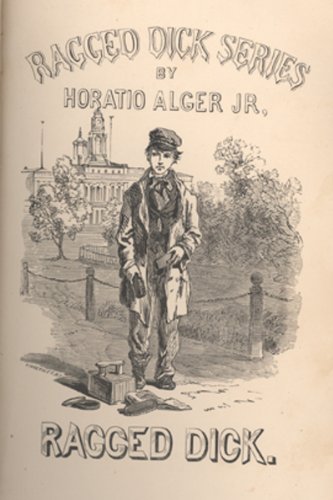
Ragged Dick (Horatio Alger) — This is probably my most unexpected pick, but it’s a proposition at the heart of the musical I’ve been working on for 2 years, that the story most associated with, you might even say the story that created, the American Dream myth, is a queer story.

UPDATE: June 20, 2024:

On Christopher Street — Collected essays by gay writer and publisher Michael Denneny. The essays span the 70s through the early 2000s, but together they tell the story of the creation from scratch of a gay culture in the wake of Stonewall. Honestly, it’s breathtaking to see in real time how quickly gay culture sprang forth when we didn’t have to, or weren’t willing to, hide anymore. Denneny nearly single-handedly created the genre of gay books and gay publishing. Even if you think you know the history, this is a must-read.

Ground Zero — Andrew Holleran wrote this collection of essays in the 1980s as the plague came creeping across our gay world. It’s a terrifying book.

The Persian Boy — My dad gave me this novel, one of his favorite books, when I came out to my family at 20. It’s by Mary Renault, historical fiction, written from the point of view of Alexander the Great’s boy lover. Action, adventure, melodrama, sweeping, epic. Especially poignant for me because it’s one of those many gestures my father made when I was young that at the time I didn’t recognize as love, but do now.

Out of the Shadows — The reason we build our movement on Pride, obviously, is because our lives, our relationships, our aspirations have for so long and still been determined and shaped by shame. That stuff lodges deeply in us and doesn’t go away no matter how proud we are. By Walt Odets. A very moving book about love and greater possibility.

Then, There.

When I was about 14, my cousin (my father’s niece) who was a few years older, in college, an aspiring poet, stopped in Indiana on her way home to Minnesota from a school trip abroad. She brought scone mix and a long cylindrical candy with “Stratford-on-Avon'“ printed down the center of it. She brought the Iron Butterfly and Jesus Christ Superstar albums. We sat around the stereo console listening to Inna Godda Da Vida, looking at each other like something from a faraway planet had landed in our living room.

My parents didn’t like her music, but they, like all of us, were taken by her worldliness, her sophistication. She had “class,” my mom and dad said.

I, in probably the most tender phaselet of my budding artist phase, fell particularly hard. For Christmas that year, she gave me a blank journal, which I filled with all my most private thoughts. It’s the first time I remember thinking that my interior life was important, that it had some value beyond me.

I wasn’t a very disciplined diarist. There are long gaps, and much of it is more philosophical musing than chronicle, but I’ve kept that book close to me my whole life. It starts with a tangle of girlfriend problems and ends shortly after I admitted in writing that I was gay. And it records, somewhat elliptically, my first sexual experience at 16.

That diary is the beating heart of my new piece, Jack. The show strays to points before it and points after but is anchored by that book and what I wrote in it.

A while ago, I shared "Now, Here,” the opening song of Jack, and now here is “Then, There,” which ends the show. Both are sung by the older Jack character, who narrates the piece, reflecting on his teen years. (Most of the other songs are sung by the teenage Jack character and others.) The older Jack sings this song to the younger Jack.

I hesitated to share this song. Like so many stories of queer lives, Jack is about, among other things, shame and reconciliation. The narrative thrust of the show is the older Jack’s quest to forgive his younger self, and I didn’t want to give away the ending. But you already knew how it would end, didn’t you?

Then, There (from Jack, by Steven Cheslik-DeMeyer)

Pride.

 
boys-in-the-band-mart-crowley-1960s-promo.jpg
 

There were several moving speeches and moments in last night’s Tony ceremony, but I was especially moved to see Mart Crowley accept the award for best revival of a play. The original production of Boys in the Band opened in 1968, a year before Stonewall, and I can’t help but think it contributed to the energy of that time and place which boiled over into the rebellion.

The recognition must be a sweet triumph for Crowley, whose play very quickly became an object of scorn by the gay community. When I was coming of queer political age in the late 70s/early 80s, I learned that Boys in the Band was the thing to hate long before I ever read it, or saw the film adaptation. Described as self-loathing, reactionary, a minstrel show of stereotypes — all reductive, unfair criticism — it’s sort of the Uncle Tom’s Cabin of the gay rights movement, another work that’s mischaracterized and reviled mostly, I suspect, by people who’ve never read it. Or seen it.

Boys in the Band is a play about shame, and it’s painful for us to admit that as queer people our identities are inextricably bound up with shame. But why? Our obsession with pride is an explicit reaction to shame. The fact that we can’t as a community acknowledge the importance of shame makes it nearly impossible to reckon with. What gives the movie its punch, even still, and what makes this new production so moving, is that those guys from 1968 are still us. We still grapple with all the same crap. We still live in a society that to a large extent hates us, wishes we were more like them, or would just go away. We still struggle mightily to love ourselves as we are.

That’s what I think, anyway.

This beautiful new production of Boys in the Band, its recognition as an important play, historically and still, and Matt Crowley on that stage with a Tony in his hands thanking the original cast members (many of whom did not survive the plague) made me very proud last night.

Terroir

I flew home from Indiana last night. I was with my sister’s family for a few days while my nephew had surgery.

One evening, on the way home from the hospital in Indianapolis to the suburb where they live, my brother-in-law and I (my sister stayed the night at the hospital) stopped at a grocery store for a bottle of wine, and, as we came out of the store and walked across the parking lot, the smell of the June evening brought my teenage years suddenly back to me whole. Maybe June in a lot of places smells like some combination of cut grass and tar, manure, car exhaust, tree pollen, but every place has its own particular amalgam and nothing else smells like June in Indiana.

It’s out front in my mind because I’m writing a piece about those years and that place and time, and one of the songs, called “Now, Here,” is specifically about that atmosphere, that setting. It’s the opening song, meant to set the scene. At least that’s what it is now. Who knows how these things change over the time it takes to finish and develop a musical?

I’ve always been squirrelly about sharing unfinished work, but as I get older it’s not that I’m less scared of things but that I care less about being scared. Self-mortification makes me stronger. And maybe the show will never come to fruition. LIZZIE took decades and how many of those do I have left? I feel an urge to share the work now.

Waiter!

I’ve started having restaurant dreams again after being free of them for 25 years.

Anyone who’s ever waited tables knows these dreams. Your whole section is seated at once and you’ve lost your order pad and the tables have been rearranged so you don’t know how they’re numbered. Or you walk through the dining room and someone from every table you pass asks you for something — another round of drinks, a dessert menu, the check — and you think you’ll remember them but as they accumulate you realize you’ve forgotten them all. You go in the kitchen and there are dozens of plates ready but you have no idea where they go. You run to the basement for something — what? some mustard, a bottle of wine — and you never make it back to the dining room because you’ve taken the wrong stairs or the wrong hallway and you just keep trying and trying until you wake up. Everyone you pass wants something, the cooks, the customers, the manager, the other waiters. Everyone hates you. You’re running in circles, you have no idea what you’re doing. You’re crying in the bathroom.

I waited tables for a living through the better part of my twenties, mostly hated it, was never very good at it. But it was what you did, and sometimes it could be fun, certainly much more fun than sitting in an office. It paid MUCH better than retail and even back then when rent was cheap it was a struggle to pay the bills. We’d work till midnight, then drink martini after martini at the bar around the corner, usually for free or next to it because we knew the bartenders and we were all in this together, take turns disappearing into the bathroom to snort cocaine (our pockets were STUFFED with cash!), and find ourselves at dawn in someone’s apartment who we probably didn’t even know, clammy, grinding our teeth and waiting for the drug dealer to show up because as everyone knows you don’t stop snorting cocaine until there’s no. more. cocaine. Anywhere. Or I’d end up at St. Mark’s Baths at 4 a.m. and home by sunrise feeling downright virtuous.

Sorry. That was a tangent. But sometimes I think about my early twenties and wonder, “How am I even alive?”

So, the dreams. I’ve started having them again. They continued for maybe 5 years after I left restaurant work for legal proofreading at 29, and, though I have my share of anxiety dreams they haven’t involved restaurants for a very long time. Until the last few weeks. Now I have them just about every night. Sometimes several times a night, in variations. I don’t sleep well or soundly, haven’t for years.

Life is, I don’t know, heightened lately. There’s my show headed for Broadway knock wood. My mother-in-law was recently diagnosed with cancer, and there’s no way to spin that any other way than bad. My father had a scare this week, not as serious, but he’s 85 and alone. Crazy good, crazy bad.

And now I’m having those dreams again that I’m waiting tables and failing, failing, failing.

Greencastle, Indiana, or ...

I’ve thought a lot about Sherwood Anderson as I write about the small town in Indiana, Greencastle, where I lived from age 13 to high school graduation. Anderson’s hometown, on which he based his book Winesburg Ohio, finding its portrait unflattering, more or less disowned him. (I wrote a paper in a college freshmen English class about Anderson’s play, Tea and Sympathy, arguing that it was homophobia disguised as tolerance — its message being not that people shouldn’t persecute gay boys, but that it was okay to be effeminate as long as you’re heterosexual. I wish I still had that paper. I remember the professor gave me a good grade but said he thought I wasn’t being quite fair. I stand by my argument.)

My parents left Greencastle a few years after I did — my dad found work in Muncie and they settled there. I only sustained one friendship from my teenage years. More recently, I’ve been in touch on social media with a few high school friends, and have rekindled friendships, but I don’t have any meaningful ties to that town except my memories.

I have been, and certainly was at the time, very critical of the people and culture there, but my feelings, as they’ve ripened over the years, have sweetened, and that sweetening is one of the things that motivates and underpins this new work. I like to think my portrait IS in many ways flattering, or at least fair, but to be honest, I know it will hurt some people. I mean, one of the songs is called “I Always Hated That Town In Indiana.”

Anderson changed the name of his hometown, but of course everybody knew what he was writing about. I’ve struggled since I began writing this thing, and still, with the question of whether or not to use people’s real names. The work is autobiography, it’s confessional, so it seems contrary to the spirit of it to alter the facts.

[Correction! A friend just told me that Tea and Sympathy was written by Robert Anderson, not Sherwood Anderson. So, that’s embarrassing, but my college anecdote was not germane to anything except my compulsion to follow a tangent. Anyway, enjoy the clip. After watching this trailer, I really want to watch the movie, which I’ve never seen, have only read the play and that was many years ago.]

Starring: Deborah Kerr, John Kerr and Dean Jones Tea and Sympathy (1956) Official Trailer - Deborah Kerr Movie Tom Lee is a sensitive boy of 17 whose lack of interest in the "manly" pursuits of sports, mountain climbing and girls labels him "sister-boy" at the college he is attending.

Zero Sum Gender.

Gender is on everyone's minds now. Just in the Op-Ed section of the New York Times today, there’s an article about genital surgery on intersex babies and an article about the myth of sex hormones behind the policing of Caster Semenya’s gender.

I think about this stuff, always have. As I’m writing this autobiographical new piece, about my teenage years, I’ve been looking really closely, at least in terms of my experience, turning this notion over and over in the light, this notion of one’s gender as a part of oneself or “one’s self,” which is to say one’s own feeling about one’s gender, or gender identity (if they are not the same thing). (That was a chewy mouthful of a sentence!)

Where does it come from, this neurotic belief, against all evidence, that gender is strictly either/or? It's ancient, though not necessarily universal. For Western Christians there's Adam and Eve, and whatever older stories that story is based on. Are there any anthropologists in the house who can recommend some reading?

I did not, as a kid, feel necessarily “gendered,” except in that I felt very much like not a boy. I felt pressure to be a boy, but I felt more like a girl; still, I understood that identifying with girls, being with girls and enjoying girl things, was crossing an important line.

Then puberty brought physical evidence that in some possibly immutable way I was going to be a male person in the world. Well, and by then I think I’d thoroughly internalized the idea that life would go more smoothly if I could figure out how to do boyness, so I did, quite consciously, start to study and teach myself. Maybe all people do that at some point, consciously or not, learn a gender, I don’t know. It is something I feel like I’ve done over and over at each phase of my life. In my 20s, I learned young man-ness; in my 40s, I learned older man-ness.

I’m almost certain that if '“non-binary” had been one of the choices when I was a kid, that’s how I would have chosen to identify my gender.

Hoofers.

It’s International Dance Day. Who decides that? Well it’s a good excuse, not that I needed one, to watch a few of my favorite clips of people dancing. There are a million of them from old MGM musicals, but here’s a short one I love.

Easter Parade is available on Blu-ray for the first time 2/19! http://bit.ly/EasterParadeBD If you can't join 'em, beat 'em! When his long-time dance partner abandons him for the Ziegfeld Follies, Don Hewes decides to show who's who what's what by choosing any girl out of a chorus line and transforming her into a star.

Broadway performers are demigods to me. I live in awe of what they do. Literally nothing brings me more joy than a stage full of people tap dancing.

Patti Lupone with the 1987 revival cast in Anything Goes on the Tony Awards. Anything Goes is a musical with music and lyrics by Cole Porter. The original book was a collaborative effort by Guy Bolton and P.G. Wodehouse, heavily revised by the team of Howard Lindsay and Russel Crouse.

And finally Agnes DeMille's dream ballet from Oklahoma! I've been thinking about this show a ton this season -- well I'm kind of always thinking about it if I'm honest -- but now especially with this new revival on Broadway and the fact that the Tony best musical category looks to be a contest between dark and experimental vs. classic-style musical comedy. Which is funny because Oklahoma! is the original dark and experimental but now it's the show everyone mentions when they want to share their misconceptions of classic-style musical comedy.

Uploaded by Izt Ilys on 2014-12-28.

Everything's All Right.

I love the spring holidays. All of them. Renewal, fertility, resurrection, turning. I know a bit more about the Christian holidays and the pagan holidays because of the culture I grew up in and have traveled in. Holy week fascinates me, in the same way that Advent fascinates me, the ritual marking of days passing. It feels cosmic.

I wouldn’t say I’m not a believer. I don’t like the label “agnostic” because there are things I do know. And I don’t like the way most atheists talk about faith vs. reason, and I don’t like the way a lot of Christians equate their beliefs with faith. I don’t believe in “God” per se, but I have faith. I am a person of faith. Why would I get up in the morning if I didn’t have faith? I go to bed every night full of faith that tomorrow will come, that there will be love and beauty in the world, still.

My own beliefs regarding the nature and meaning of existence are somewhere in the sort of Emersonian Universalist camp. I believe that everything is one and is immanent within us, that our moral code comes from within, that every moment contains the universe, that intelligence, beauty, poetry, metaphor, art point to our connectedness, but that the whole project is essentially mysterious. I believe that love is all.

Anyway. It’s Holy Wednesday, for those who observe.

Original album meets movie visuals.

To use Pete's favorite word: tectonic.

 
Screen Shot 2019-04-16 at 9.16.09 AM.png
 

It’s hard to put words to how moving it is watching this. It literally took my breath away.

Most straight people have no idea what the closet is and what it does. The experience of negotiating withholding or disclosing a secret that carries such a high social risk — and not just the one big coming out, but the multitude of little daily comings out — will always be a marginal experience. It’s just math. We will always be explaining ourselves. It will always be a fact about us that we will have to, at some point, at many points, decide whether to accept the risks (of suspicion, pity, disgust, distraction, violence, etc.) and disclose (the upside being to live as a whole, integrated person in the world) or keep hidden (and remain fragmented, superficial, false, afraid). The constant vigilance is exhausting. The psychological and emotional toll of the closet shapes every relationship, every encounter, shapes our lives.

To watch, on a mainstream TV show, a viable popular candidate for president, speak so candidly and thoughtfully about this experience changes everything. Especially a candidate who is exceptional for so many reasons having nothing to do with his sexuality.

My White Knight.

The last few days’ conversations about, one, Pete Buttigieg and whether or not he’s too well-read to be elected, two, the primary candidates’ visits to Iowa, and, three, the new Broadway revival of The Music Man coming next year have distilled, in my brain, into this song.

Provided to YouTube by Universal Music Group My White Knight · Barbara Cook The Music Man ℗ 1958 Capitol Records, LLC Released on: 1958-01-01 Musical Director, Associated Performer, Vocal Arranger: Herbert Greene Producer: Dick Jones Composer Lyricist: Meredith Willson Auto-generated by YouTube.

That’s the late, great Barbara Cook singing. Hers is my favorite recording to listen to, though I’m much more familiar with Shirley Jones in the role since it’s the movie version of the show that I grew up. Also, I was a fan of hers from the Partridge Family before I connected her with these earlier classic movie musical performances.

Speaking of those performances, it’s difficult for me, even all these years later and having seen several other women in the roles, to separate my idea of Laurie in Oklahoma, or Julie in Carousel or Marian in The Music Man from Shirley Jones. Even after discovering years later that the films so bowdlerized the R&H musicals, especially in the case of Carousel, which hardly even makes sense in the film. (Not as bad as what MGM did to Babes in Arms, the film of which didn’t even retain any of the Rogers and Hart songs, or maybe one or two, I can’t remember.) Anyway, I still see Shirley Jones’s sunny face and bright soprano when I think of those characters.

On that note, even though I think this film adaptation is very good, inexplicably they rewrote this song, using parts of My White Knight but creating an entirely new swingy refrain. I like it, but I think the original is far superior.

And then there’s the much later TV movie adaptation with Matthew Broderick and Kristin Chenoweth. It’s not great, though I do like Broderick’s performance quite a bit, which is sort of slyer, drier, than Preston’s. Though he’s more youthful and cuter than Preston in the role, somehow he reads as more cynical, a more convincing criminal. I also love Chenoweth in this one. Her conception of Marian is more adult, less petulant, less prickly than Jones. But I think because her face and voice are so preternaturally pretty, the more knowing quality she brings to the performance gets a bit lost in the film’s overall too-sweet tone.

Kristin singing My White Knight in Meredith Willson's The Music Man. My White Knight My white knight, not a lancelot, nor an angel with wings; just someone to love me, who is not ashamed of a few nice things. My white knight who knew what my heart would say if it only knew how.

Support Community Theater!

 
emperors new clothes.jpg
 

The flurry of press about LIZZIE yesterday, and it being World Theater Day, has me reflecting. This photo is ground zero — not that my theater career is a nuclear bomb. But there is a sense that it is about to explode.

My mantra for a long time — I’ll call it my post-disillusionment period — has been, “Relax. It’s always more likely NOT to happen than to happen.” Because that is true. My favorite Buddhist lo jong mind-training slogan is, “Abandon any hope of fruition.” Pretty often people read this slogan on my arm and think it means that everything is awful so just expect the worst. It means something more like, “You don’t know how things will turn out, so don’t base your happiness and sense of well-being on a particular outcome.”

Anyway, that’s me in my first play! It was a production of The Emperor’s New Clothes, produced by Putnam County Playhouse, in the Indiana town where my family moved when I was 13. They did — and still do! — a season of 3 or 4 plays every summer: a musical, one or two straight plays, and a children’s show. I had I think one line, maybe two, and I was SERIOUS about it, and I loved that costume, which I think my mother made but I’m not sure of that.

Something I remember, more clearly than I remember anything I did in the play, is this very short scene where a “herald” comes in and announces something and the director, Nancy McFarland, set his lines to music, so he sang them instead of just speaking them. It blew my mind that one could just … do that.

 
abandon.jpg
 

Some Stuff About Memory.

Shades of Black Mirror and Eternal Sunshine of the Spotless Mind aside, do we really need to remember everything our minds insist on remembering? It’s hard to imagine not; our memories seem so essentially us, so inextricably a component of “self.” This article in the New York Times today, about the wisdom of intentionally forgetting is, to me, chilling, dystopian.

I think a lot, since my mother died, about that platitude that says grief keeps your loved ones close to you after they die. Usually I think it refers to good memories, because even and maybe especially the sweet memories are the ones that hurt the most, and it’s a neat way to manage the pain they cause.

But I also, and more often, think about that idea in terms of my memories of the last week and especially the last full day before my mother died, because that period of time was — I always use this word — harrowing. It was many things, but mostly it was harrowing.

Sometimes — those times being whenever a memory from that week pops into my head and forces me to go like a slideshow through the sequence of events — I wish I could un-remember it.

Because it hurts, but also because it’s disruptive. Almost anything can trigger recall — exiting a highway in a car on a hot sunny day, seeing a bandaid over a wound or a scrap of 1/4” plastic tubing, my father’s face, anything to do with hospitals, even just walking by one — but once a fragment of memory is in my head I’m on a runaway train that will stop when it crashes. I have to mentally recite the whole sequence at least to the point of arriving at the hospital where the nurse put Mom on a fentanyl IV which quickly transformed her from rigid and terror-stricken back to some loopy semblance of my mother 

The process takes a while and takes me away from whatever I’m doing. If I’m alone, it literally stops me in my tracks. If I’m not, then I’m compelled to run two mental tracks at once, the present and the past. But what about that word “disruptive”? It’s only disruptive if I consider it to be less important than whatever else I’m doing. Or unimportant. How do I know?

I don’t have any desire to erase those memories. The thing, the thing where grief keeps our lost loved ones close — is holistic. The feeling is experienced holistically. I remember Mom and feel her with me when I eat chicken noodle soup because she taught me how to make chicken soup when I was a teenager. I remember her when I see an office chair on wheels because that’s how we got her from her bed to the car when she was immobilized with pain.

I don’t want to forget that last week, that last day. I never felt closer to my mother than I did those days and hours, never felt more intimately connected to her than when I was helping her (I think I was some help, I tell myself that I was some help) through that grueling (grueling? all the words seem quaint compared to what they try to describe) episode.

I don’t feel guilt or regret, not too much anyway, about anything I did on that day, any decisions I made, so as bad as it feels I don’t necessarily want to forget that in fact, I think, I functioned pretty well under a kind of emotional and physical and spiritual strain I’d never felt anything remotely close to in my life. Because those memories are still with me, intense, vivid, maybe next time I will be more focused and clear. I have no idea. But this will happen again. It’s not like you’re tested once and you pass or fail. If anything is certain, it is that there will be no end to the suffering of people we love. 

The Baby And The Bathwater.

 
merlin_152029710_3e91778d-7238-4961-a23c-ff00ed8294ea-superJumbo.jpg
 

I can't wait for this one!

But I have to push back a bit on this: "Broadway has been reckoning, slowly, imperfectly, with the idea that musical comedies need to offer female characters full interiority." I know there's a ton of sexism and misogyny in the musical theater canon, and I'm all for addressing that OF COURSE, but can I point out that every single Rogers & Hammerstein "golden age" musical, and a whole bunch of others as well (My Fair Lady? Gypsy? West Side Story?...), have female protagonists? And not just female, but fully realized women characters who are grappling with big, complex problems and are the authors of their own lives (Oklahoma, Carousel, South Pacific, The King & I, The Sound of Music, etc.).

I completely support this moment of reckoning in the theater, but I want to give credit where credit is due. American musical theater has often been way out front on this stuff.

I Just Want To Sleep.

Monday night I went to bed at about 10, as usual. By midnight, I hadn’t fallen asleep, so I got up and read for an hour and a half. I went back to bed, lay there till about 3, fell asleep, woke up at 3:30. I wasn’t completely awake the whole period from 3:30 until my alarm went off at 6, but I wouldn’t say that I really slept. I dozed off a few times for a few minutes.

That was a particularly bad night. Here’s a good night:

I go to bed at 10 and fall asleep within 20 or 30 minutes. I wake up around 2 or 3 for maybe 20 minutes, and then again every hour until 5 when I wake up completely and wait impatiently for my alarm to go off at 6 so I can get out of bed. That’s a good night. Most nights are somewhere in between, maybe I wake up 2 or 3 times an hour, and I almost always wake up around 5 and don’t fall asleep again no matter how much or little sleep I got before that.

When I was young, I had night terrors, lots of recurring dreams and intense nightmares, sleepwalking, waking dreams, through my 20s, but never difficulty sleeping. Used to be, if I didn’t set an alarm I was in danger of sleeping all day. It used to be, in fact, difficult to wake up. Now even when I take a nap I wake up every few minutes.

I’m fairly certain I started having trouble sleeping a few years before my mother died, but that’s when I remember it getting bad enough that I felt like it was an “issue.” That was also when I started having difficulty reading, or concentrating on anything for more than a few minutes. Those problems have abated somewhat, though not disappeared. I can read for long periods again, but I still have a hard time with the sort of dense non-fiction that used to make up most of my reading. 

I also connect this change to the 2016 election — I am without doubt more constantly anxious than I ever remember being since adolescence — but, again, the trouble sleeping started before that.

Somehow related, though I’m not sure how much or in what way, is my sleep apnea. For as long as I can remember I have from time to time woken up abruptly, feeling like I was being choked. It’s terrifying. At some point I read about sleep apnea and thought “yeah that’s exactly what I have.” I figured out that it always happened when I fell asleep on my back, so I started sleeping on my stomach. Some time later I realized that the chronic neck and shoulder pain I’d been feeling, which I’d assumed was due to playing guitar, was actually a result of sleeping on my stomach, so I started sleeping on my side. It’s not the most comfortable way to sleep, but it’s better than worrying about whether I’ll die in my sleep.

For years I felt like I was managing. Until this insomnia thing.

A year or two ago, I mentioned this problem, the insomnia and the self-diagnosed apnea, to my former G.P., and he referred me to an ear, nose, and throat doctor who sent me to the Cornell sleep center for a sleep test, which did in fact show mild obstructive sleep apnea, for which they prescribed a CPAP machine. I guess most people are familiar with those now, they’re pretty common. You sleep with a hose connected to your face through which a machine pushes air into your mouth to keep your passages open.

I had resisted the CPAP for a hundred reasons (I happen to like falling asleep with my arms around my husband, for one) but the sleeplessness was obviously untenable, so eventually I gave in. I thought, finally, I will sleep! I really thought it was going to change my life.

It was a nightmare. Not only did it not help me sleep, I couldn’t take a deep breath on my own so it made me feel like I was suffocating, and after about 3 hours of meditating, telling myself “it’s okay, you can breathe, you’re okay, just relax,” I would start to panic and rip it off. But I persisted, assuming it could take a while to get accustomed to. After two weeks it was still the same scenario every night, no sleep, no increase in the time I could tolerate the machine. I got a phone call from the vendor who leases the machine telling me I was noncompliant and my insurance company would cease paying for the machine rental if I didn’t wear it at least 4 hours a night. I sent it back. (That’s something you might not know about CPAP machines. The vendor is monitoring in real time when you go to bed, your breathing patterns, when you put on and take off the mask, when you wake up. Not your doctor, but the pharmaceutical vendor.)

My old G.P. moved away and now we have a new primary whatever they call it. (He’s a N.P., so I never know what to call him.) At my first visit, he asked if there was anything else I wanted to address so I reluctantly brought up this sleep issue. I say reluctantly because I feel a little shame about not being able to use the CPAP. I got the feeling he thought I was trying to score some oxycontin or something. I didn’t ask for sleeping pills. If I thought it would help and not just cause more problems, I’d take them in a heartbeat, but I’m a Judy Garland fan. I know where that road goes. (I think it’s a bugaboo of this nurse: a few months later he was strangely adamant about not prescribing pain meds for my broken toe, meds which I hadn’t asked for and didn’t want anyway because it didn’t hurt that bad.)

So he said, well, if the CPAP didn’t do it, then “we need to talk about sleep hygiene,” and he gave me that litany — the weight of your blanket, temperature of the room, no alcohol, turn off the TV and computer for a while before you go to bed, yada yada. I know it all, have tried it all, it has no effect.

(My apprehension about drugs notwithstanding, I was for the last few years occasionally taking Benadryl on particularly difficult nights. It seemed to help a bit. I could go from waking up a dozen times a night to waking up 4 or 5 times. But in the last few months — I think only on those nights I’ve taken Benadryl — I’ve woken up a few times feeling the beginning of a panic attack, so I stopped taking Benadryl.)

So that’s where I am. I read and work in the morning until I can’t keep my eyes open, then I take a 1/2 hour nap, which often will at least keep me awake for the rest of the day. But if I start dozing again later, I take another 1/2 hour nap. It’ s not ideal, obviously. Those half hours are disruptive and they add up. I get less done. And even with the naps, I am always tired, always sleepy, always a bit dull-headed.

As long as I can remember, my father has talked about waking up for an hour or two in the middle of the night. He says that he used to use that time productively, that he felt extra lucid and would lie in bed and solve problems that vexed him in daylight hours. (He worked as an engineer for an electronics company, so solving problems was, I think, his job.) Now, 85 and retired, he says his mind is not as clear and he doesn’t have pressing problems to solve, so those middle of the night vigils are just frustrating.

Super Worm Equinox Moon.

 
https _specials-images.forbesimg.com_dam_imageserve_1136098658_960x0.jpg?fit=scale.jpg
 

I think of the sun as a necessary evil, but the moon I am in love with. I love that we name them now, like Hindus name manifestations of a God. I love all the moons, but I think my favorite is the Super Worm Equinox Moon.

I have a thing for the Spring Equinox because I love the balance of it, of two equal parts, and because it falls on the most auspicious cusp, between Pisces and Aries, the end and the beginning of the astrological calendar, the cusp on which I was born.

Sometimes I Change My Mind.

I found myself at times having an immediately skeptical reaction to this new thing of coming out as “nonbinary.” But I’m coming to see it differently.

The idioms that queer people use to try to pin down, to name the things that are different about us, that feel different, these idioms evolve, shift, change, but they still describe phenomena that are essentially mysterious. The evolution of the language doesn’t move in a linear progression toward clarity; I think it changes for more ordinary reasons: words get tired, we get tired of using them, labels that were once neutral accumulate negative connotations, words that were negative get reclaimed as expressions of pride, new generations need to set themselves apart, create their own way of speaking, create their own lens to see the world and themselves through, assert their newness.

The current lexicon (transgender/non-binary/genderqueer/pansexual, etc.) is no more accurate or “correct” than the gay/bi/lesbian/butch/femme/transsexual lexicon that I grew up with, or homophile/pederast/invert/trade/fairy/Mary Ann/sodomite/urning/Uranian/Sapphist/third sex/intermediate sex, or all the way back to Plato, a bunch of Greek words that are hard to translate, which is not even to get into the various ways indigenous peoples all over the world have understood and described unconventional sexual and gender expression.

We still have no earthly idea why there are variations in sexual expression and desire. And is “why?” even an interesting question? We know these things are “natural,” or we safely assume they are because we see them echoed in myriad species and persisting in our own over the course of history.  

When a younger generation coins new terms, invents new language and metaphors, paradigms, rubrics (is there a word that includes all these things?), they might think they are offering new information, or believe that they are getting closer to objectively describing queer lives or queerness, and sometimes to their elders it feels like — and this is what I realize I’ve been so defensive about — they are, in imposing this new language (and the set of beliefs it implies), rejecting OUR beliefs about ourselves, our ways of describing ourselves and our experience, telling us we were wrong, that we misunderstand ourselves.

But I think I’ll try to stop being defensive. It is the prerogative of the young, not to mention a longstanding European tradition, for people to give things new names and tell us they’ve just discovered them. I’m okay with that.

 
Df3399hVMAEUHQi.jpg