In (Qualified) Praise of Social Media.
I complain a lot about the internet and social media, how they’ve corrupted so many aspects of our culture, etc., but I find it hard to give up exactly because of moments like this:
Queer people have their coming out stories; gay men in particular have their “first gay bar” stories. We tell them like campfire stories, we share them because they are all the same and join us in a community that persists across time and place, and because they are particular and reveal things about the person telling them, about who they are, or were at a certain moment in their lives and in history more broadly, about gay life at the time in the place we came of age.
My first gay bar was not really a bar but a disco. I remember going there my freshman year of college at Miami University, but I may have been a sophomore — I remember dancing to Diana Ross’s “I’m Coming Out,” and “Celebration” by Kool & the Gang, both of which were released in late summer/fall of 1980, my sophomore year. I have misremembered either the date or the soundtrack.
The place was called Infinity, and it was in Miamisburg Ohio, near Dayton, about an hour’s drive from the Oxford campus. Who had a car? I don’t remember anyone having a car but someone must have. The images in my head are few and circumscribed, I remember standing in line at the door and presenting an ID to a guy at a podium. I want to say we had fake IDs but I’m not sure of that — at the time if you were 18 in Ohio you could get into most bars but you could only drink “3.2 beer.” (My new best friend Scott grew up in Dayton and knew about this club. Scott was the first “out” gay man I knew, to my 18-year-old eyes he was very sophisticated about gay things. He had an older boyfriend back home. (“Older” could have meant 25, we were so young.) But I don’t remember what the door looked like, or the guy checking IDs.
I remember a large wood dance floor and the feeling of sailing around it, the exhilaration of dancing in a crowd of gay men for the first time in my life. I loved dancing. That wood floor is pretty much the only memory I have of the interior except that it was a large room with a high ceiling and (possibly?) a mezzanine level that overlooked the dance floor. I remember the songs, the feeling, one or two guys I went home with, or to hotels, and particular things about the sex we had, mostly what I was discovering, what they were teaching me. But that’s it, and I’ve longed for more concrete memories, and, failing that, at least some documentary evidence of the place. Googling “Infinity gay disco Miamisburg” never turned anything up. I tried for years.
A while back I joined a Facebook group called GayBarchives, where gay people, mostly men, mostly of a certain age, post memories, paeans to their younger days, the bars they loved, the places where they found husbands, lost friends, inquiries to see if anyone else remembers the bar they remember, their hometown bar, the old days. For some reason it didn’t occur to me until last week to query this group about Infinity. Lots of people remembered it and filled a few gaps in my patchy recollection:
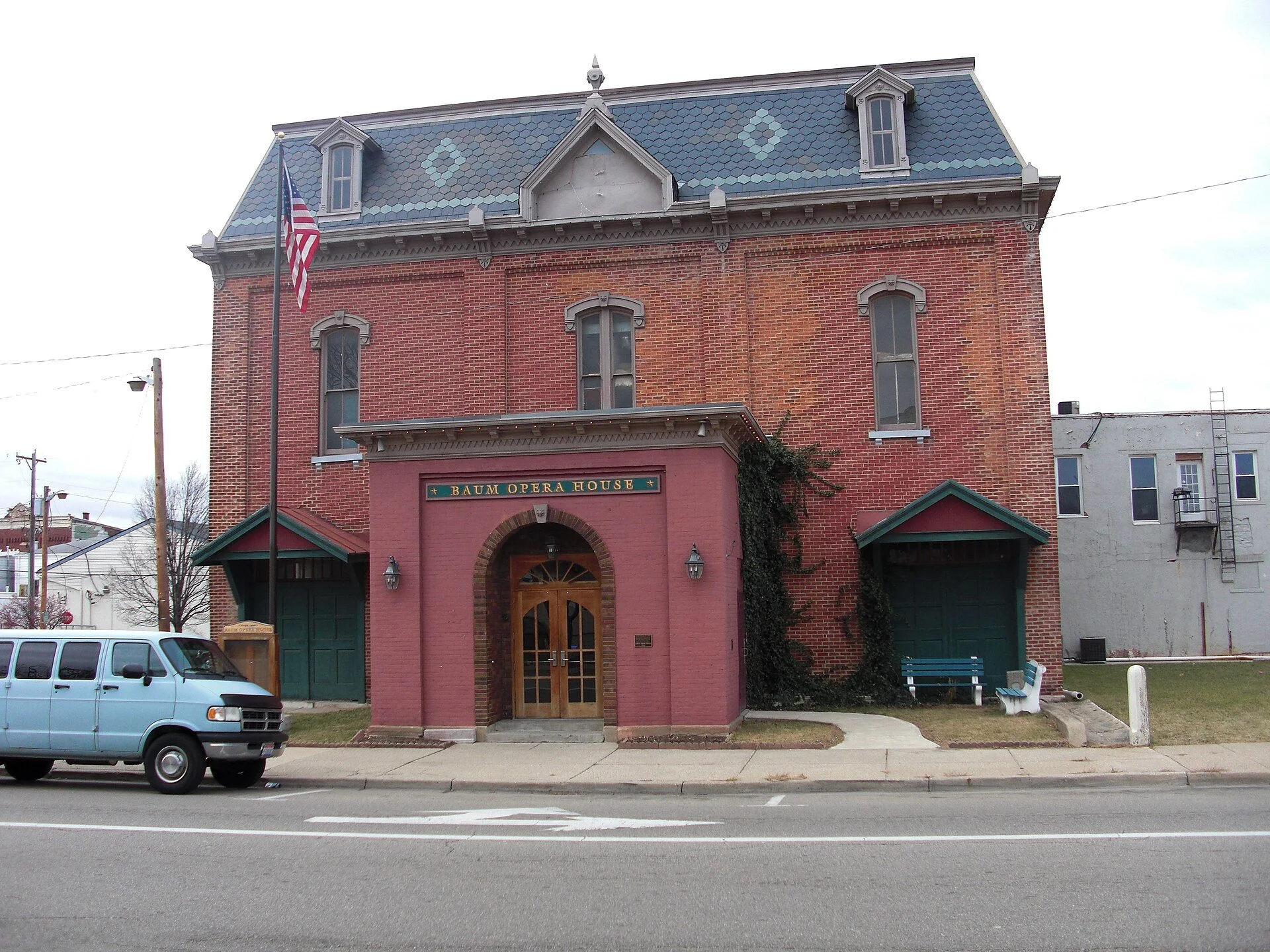
“My husband's brother-in-law used to do drag there. It operated in what is now called the Baum Opera House. The building is still there and is a community meeting space now. It's almost always been a rental space — weddings, parties, school plays, meetings, rec basketball, etc. I don't think the club was a permanent tenant. I think they just rented the space when they wanted to have a club night.”
“The owner was a crusty old broad named Mary. I feel that it was a very short lived but magical time. I went home with two really cute guys that said they were brothers. They weren’t and I had my first threesome at 19.”
“That was the coolest bar in the most unlikely place ever.”
“Mary, the owner had a pistol at her table and 1 rose. If there was trouble she would fire the gun into the air.”
“What was the rose for.”
“Decorating.”
The Baum Opera House in Miamisburg, Ohio is a beautiful old building, and until last week I had no idea. I think a lot of people would say that the mysterious, hard to grasp quality of old memories like these, is what makes them special and potent, and that once they’re filled in, put in context, connected to recorded history, they lose their power. For me, when it comes to queer history, so much of which is lost, often as a result of a concerted effort on the part of a homophobic world to suppress it, the magic resides in knowing and connecting our stories to the big story, not in the mystery but in the very concrete reassurance that we were always here.